

Since its creation in 2009, the price of Bitcoin has experienced drastic fluctuations. It started from being almost worthless to breaking the $60,000 mark in 2021, then soared again in 2024 due to the approval of the ETF. So, what exactly determines the price of Bitcoin? And how much is Bitcoin worth?
Unlike fiat currency assets, the value of Bitcoin is not influenced by a single factor, such as central bank policies or corporate earnings. The price of Bitcoin is determined by multiple factors working together, including the relationship between supply and demand, regulatory policies, the macroeconomic environment, technological innovation, market sentiment, and speculative behavior. This complexity makes it one of the most closely watched, yet also the most controversial, assets in the world. This article will conduct an in-depth analysis of the key elements that influence the price of Bitcoin.

What factors influence the price of Bitcoin?
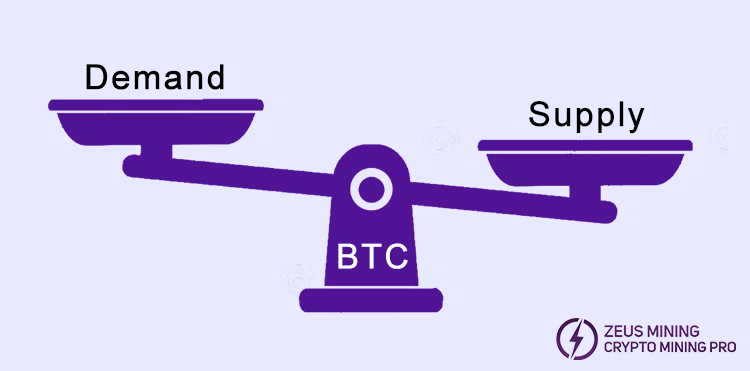
1. Relationship between supply and demand
• The price of Bitcoin first follows the most basic law of supply and demand in economics, but its uniqueness lies in its absolute scarcity. The total quantity of Bitcoin is set at 21 million coins. There is a "halving" of this quantity every four years, meaning the mining reward is halved. This mechanism slows down the rate of new coin production.
After the first halving in 2012, the price of Bitcoin increased from about $12 to over $1,000 within a year. After the third halving in 2020, Bitcoin soared from $9,000 to $69,000 within 18 months.
• At the same time, as the global recognition of Bitcoin has increased, more and more institutions and individuals have started to regard it as an asset allocation option. Some large financial institutions have started entering the Bitcoin market by purchasing Bitcoin or launching Bitcoin-related financial products, which has further increased market demand for Bitcoin. As global demand gradually grows while the quantity of Bitcoin decreases, it will lead to a continuous increase in Bitcoin's price.
2. Market sentiment and speculative behavior
• A single tweet from a celebrity may trigger a sharp rise or fall in the price of Bitcoin in a short period. Reports in the mainstream media can affect market confidence.
• Fear of missing out (FOMO) and panic selling. When the price of Bitcoin rises rapidly, people chase the price out of fear, missing the opportunity. When the market crashes, panic selling leads to a sudden drop in prices.
3. Regulatory and policy risks
The attitudes of governments around the world towards cryptocurrencies directly affect the price of Bitcoin. Regulatory policies have a "double-edged sword" effect on the price of Bitcoin. If a specific country recognizes Bitcoin as a legal means of payment, its trading volume share will soar instantly. If cryptocurrency trading is completely banned, it will cause the global price of Bitcoin to fall.
4. Macroeconomic environment
Bitcoin is gradually regarded as "digital gold," and its price is closely tied to the macroeconomy. Factors such as inflation, monetary policy, and geopolitical tensions may all affect people's interest in Bitcoin. In times of economic instability, Bitcoin is often regarded as a safe-haven asset, attracting a large amount of funds seeking to hedge against the risks of the traditional financial system.

5. Technical Level
• The underlying technology of Bitcoin affects its long-term value. The 2021 Taproot upgrade enhanced privacy and efficiency. The Lightning Network reduces transaction costs and improves usability, boosting investors' confidence.
• The theft of exchanges and the insecurity of transactions can lead to market crashes and damage investors' trust.
6. BTC competition and substitutes
Bitcoin is not the only cryptocurrency, and alternative coins may divert funds. The intelligent contract function of ETH attracts some mining enthusiasts. The issuance of stablecoins, such as USDT, may bring more market liquidity.
7. Mining costs
Mining machines need to generate a profit, so the price of Bitcoin must cover the associated costs, such as electricity and hardware expenses. When the price of Bitcoin is lower than the mining cost, some mining farms will shut down due to losses, reducing selling pressure in the market.
In the final analysis, the price of Bitcoin is determined by several factors. In addition to the factors mentioned above, other aspects have an impact, and investing in digital assets carries risks. Understanding the complex logic behind Bitcoin's price is far more critical than predicting specific price levels. Due to the high uncertainty and volatility of the Bitcoin market, we should treat it with caution and view the price fluctuations of cryptocurrencies rationally. Allocate assets reasonably to avoid losses caused by blindly following the trend.
>>What is Bitcoin mining and how does it work?
Disclaimer:
This article is for sharing purposes only. Some of the statements contained in this article are only based on our current views and assumed future expectations and involve possible actual results. It does not constitute any investment advice or invitation to investors. This website shall not be liable for any actions taken by readers based on the information in this article.
 [email protected] [email protected] [email protected] [email protected]
Dear Customers,
Hello, May 1-5, 2026 (GMT+8) is China's May Day, and international logistics will be suspended. Our company will suspend shipments on the afternoon of April 30, 2026, and resume warehouse shipments on May 6 (GMT+8). We are deeply sorry for the inconvenience caused to you. Thank you for your trust and support.
Best wishes,
ZEUS MINING CO., LTD.
 China Mainland Hong Kong
  Business Hours: (GMT+8) 08:30-20:00 Mon to Sat
  Company Phone: +86-023-72227777