

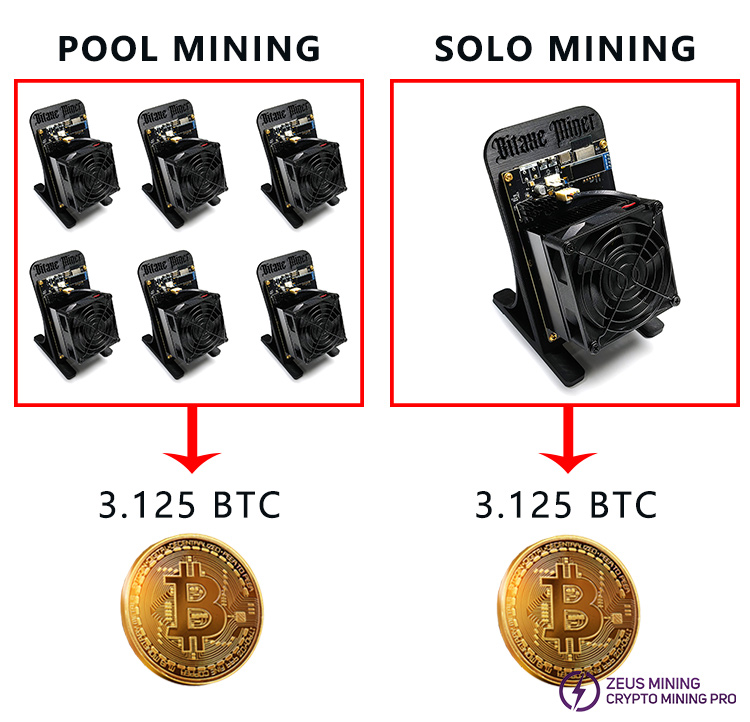
Solo mining is the riskiest but most rewarding way to mine Bitcoin. Individual miners compete for the entire block reward (currently 3.125 BTC per block) on their own, instead of sharing profits in a mining pool.
Solo mining is one of the purest and most challenging forms of cryptocurrency mining. It is like a "lone ranger" in the blockchain world, relying on no organization and using its strength to search for treasures in the digital jungle.
I. In-depth Analysis of the Concept and Essence of Solo Mining
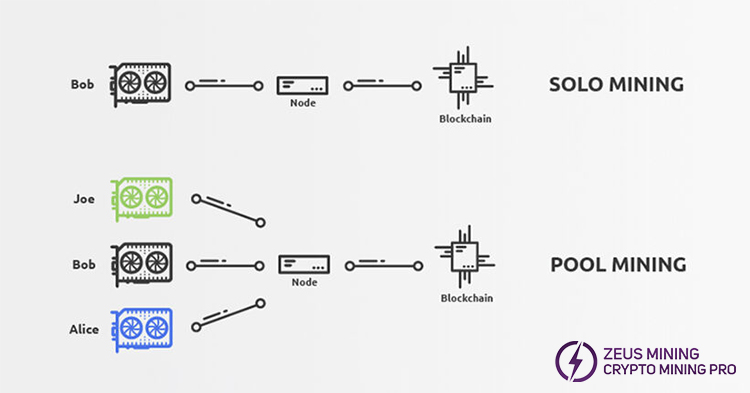
The essence of mining is that miners compete to package new transactions into blocks and add them to the blockchain by solving complex mathematical problems. As a reward, miners who successfully mine a block will receive a certain amount of cryptocurrency. There are two types of mining: solo mining and pool mining.
Solo mining is the process in which independent miners use their computing resources to generate cryptocurrency and verify transactions on their own.
• In the decentralized "digital world" of the blockchain network, every transaction needs to be recorded, packaged, and added to the blockchain to ensure the authenticity, immutability, and security of transactions across the entire network.
• The difference from pool mining is that multiple miners combine their hash rates to mine together and distribute the profits according to their contributions.
II. Detailed Explanation of the Solo Mining Mode
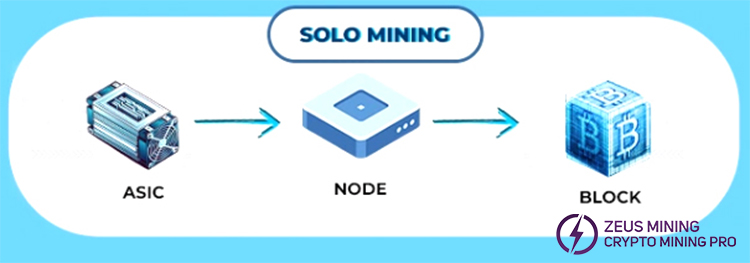
1. Miners do not need to join any mining pool organization. They rely entirely on their own computing devices and network nodes to complete the entire process, from obtaining transaction data to calculating hash values and submitting blocks.
2. A mining method that independently completes the process of block verification and creation in the blockchain network.
3. This mining mode perfectly reflects the decentralized concept originally envisioned by Satoshi Nakamoto and is the most authentic implementation of blockchain technology.
4. Solo mining has complete autonomy, unstable returns, network independence, and technical purity.
5. Miners have complete control over the mining process, follow a "all or nothing" revenue model, and each solo miner is a complete network node. It is closest to the ideal state described in the Bitcoin whitepaper.
6. The solo mining method has high requirements for the equipment's performance and requires continuous investment. However, as the overall hash rate of the cryptocurrency network increases, so does the hash rate of the equipment.
7. Solo mining remains one of the essential ways to maintain the decentralized nature of the blockchain network.
Taking Bitcoin as an example
• For example, we use Bitaxe SupraHex 701 4.2TH/s Solo Miner to mine BTC. The Bitcoin network sets a specific target hash value. Miners need to continuously adjust the nonce in the block header and perform a hash operation on it until a block with a hash value less than the target value is found. This calculation process is like searching for a specific path in a vast digital maze. Only miners who find the correct path (a hash value that meets the requirements) can successfully mine a block.
• Miners who engage in solo mining grope alone in this maze, relying on their hash rate and luck to try to find a path to success.
>> What is Bitcoin mining and how does it work?
III. Main Characteristics of Independent Mining
Ø 100% block rewards (no mining pool fees)
Ø Completely independent (not relying on a mining pool)
Ø High volatility
Ø Truly decentralized (consistent with the original vision of Bitcoin)
Conclusion:
The essence of solo mining is that individuals participate in the cryptography of the blockchain network with an independent hash rate, that is, a hash rate lottery game, seeking opportunities in high-risk challenges. By brute-forcing the solution of random hash values to compete for the right to record new blocks, it is a decentralized practice that sacrifices the risks of high energy consumption, low probability, and zero returns in exchange for the exclusive right to cryptocurrency issuance rewards and transaction fees.
FAQ: SOLO Mining Questions
Question: Can I mine Bitcoin independently with an ASIC miner?
Answer: Yes, but the success rate is extremely low.
Question: What is the best independent mining software?
Answer: BFGMiner, CGMiner, or Braiins OS+ (suitable for ASIC miners).
Question: Is independent mining better than cloud mining?
Answer: Yes - cloud mining is usually a scam, while independent mining allows you to have complete control of the situation.
Question: How long does it take for an independent miner to find a block?
It can range from several months to several years, depending on your hash rate and network difficulty.
 China Mainland Hong Kong
  Business Hours: (GMT+8) 08:30-20:00 Mon to Sat
  Company Phone: +86-023-72227777