

In the cryptocurrency market of 2026, Bitcoin (BTC) mining, as the core of the Proof-of-Work (PoW) mechanism, continues to attract global investors and miners. Despite the continued increase in network difficulty, the stability of Bitcoin's price and institutional participation ensure that mining remains profitable. According to industry data, the total Bitcoin network hashrate is expected to exceed 600 EH/s (600 trillion hashes per second) in 2026, with a block reward of 3.125 BTC. The halving event in 2028 will further tighten the supply. Bitcoin mining profitability depends on electricity costs, hardware efficiency, and market volatility; efficient operators can achieve annualized returns of 20%-50%. This article details the methods, cost structure, and revenue analysis of Bitcoin mining in 2026, helping readers gain a comprehensive understanding of this field.
Bitcoin Mining Basics
Bitcoin mining is the process of verifying transactions and maintaining the blockchain. Miners use equipment to solve mathematical problems, find hash values that match the network difficulty, and those who succeed add new blocks and receive rewards. In 2026, the block reward is 3.125 BTC, and with transaction fees, the average daily miner income is approximately $20 million. This requires miners to join mining pools or use specialized hardware to cope with a network difficulty of approximately 80T. The essence of mining is competing for hash rate; the profit formula is: Revenue = Reward + Transaction Fees + Electricity Costs - Hardware Costs - Maintenance Costs. In 2026, high-efficiency miners such as the Antminer S21 have an energy efficiency of 17.5 J/TH (Joules/Tehah), far exceeding older equipment. Mining trends include the use of green energy and AI optimization to reduce carbon footprint. To get started with Bitcoin mining, you need to understand the Proof-of-Work (PoW) mechanism: Miners calculate SHA-256 hashes, aiming to find a hash value with enough leading zeros. Difficulty is dynamically adjusted to ensure a block time of 10 minutes. In 2026, the halving effect will continue, reducing rewards and driving up prices, but the increased difficulty will squeeze out smaller miners. Beginners can start with cloud mining or small ASICs to avoid high initial investment.
Detailed Explanation of Bitcoin Mining Methods in 2026
Bitcoin mining methods are diverse, catering to users of different sizes. The primary method is ASIC mining, using dedicated integrated circuit miners such as the Bitmain Antminer series. These miners are optimized for the SHA-256 algorithm, achieving a hash rate of up to 200 TH/s with a power consumption of 3500W. ASIC mining is highly efficient but costly. The second method is pool mining, where miners join pools such as F2Pool or Binance Pool, sharing hash power and generating stable income. Pool fees are 1-2.5%, but they reduce variance, making them suitable for small and medium-sized miners. In 2026, mining pool concentration will be high, with the top five pools accounting for 60% of the hash rate.
The third type is cloud mining, which involves renting hash rate through platforms like NiceHash, requiring no hardware. Cloud mining has low costs and is easy to learn, but it relies on platform stability and has high fees (5-10%). In 2026, the cloud mining market size will exceed $5 billion, making it suitable for beginners. The fourth type is solo mining, where you mine independently and keep all the rewards, but the probability is low, like a lottery. It's only suitable for large mining farms; in 2026, the success rate of solo mining will be less than 0.01%. While GPU mining is applicable to other cryptocurrencies, it's no longer economical for Bitcoin due to ASIC monopolies.Emerging methods include merged mining and green mining. Merged mining allows mining BTC and Namecoin simultaneously, increasing returns by 10-20%. Green mining uses solar or wind power, reducing electricity costs and aligning with regulatory trends. In 2026, the EU requires mining farms to be carbon neutral, promoting this approach. The choice of mining method should consider scale: small users should focus on cloud mining, while large users should consider ASIC mining combined with mining pools.
Mining Hardware Selection and Cost Analysis
In 2026, Bitcoin mining hardware will primarily consist of ASICs. Recommended models include the Antminer S21 Hydro (water-cooled version, 335 TH/s hashrate, 5360W power consumption) and the entry-level S19XP (140 TH/s). Hardware costs account for 40-60% of the total investment, with a lifespan of 2-3 years and a high depreciation rate. Building a mining farm requires racks, power supplies, and cooling systems.
Electricity costs are the largest expense; in 2026, the global average electricity price is $0.08/kWh.
Cloud mining costs are primarily rental fees, at $0.02 per TH/s per day. There is no hardware investment, but profits are shared.
Cost control strategies: Choose regions with low electricity prices or use waste heat recovery (e.g., heated greenhouses) to reduce effective electricity costs by 20%. In 2026, AI optimization software can automatically adjust hashrate, saving 5% of energy.
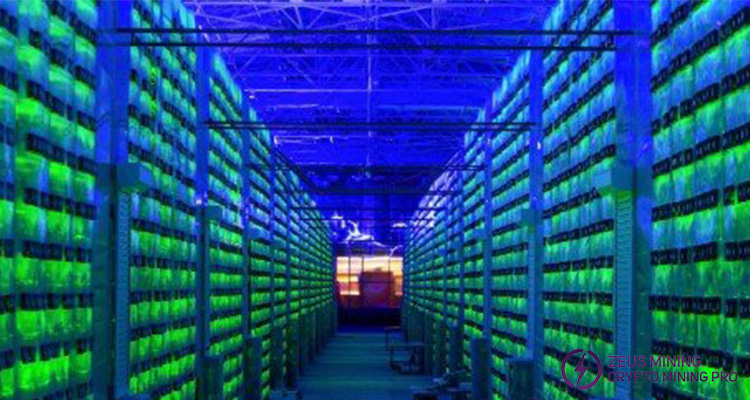
Mining Revenue Calculation and Profit Analysis
Mining revenue primarily comes from block rewards and transaction fees. In 2026, the single block reward was 3.125 BTC, and transaction fees accounted for 30%, resulting in a daily network revenue of approximately $6 million. The calculation formula is: Daily Revenue = (Individual Hashrate / Total Network Hashrate) * Daily Reward - Fees. With a total network hashrate of 600 EH/s, a single 200 TH/s miner accounts for a very small percentage and needs to be joined to a pool for sharing. Assuming a BTC price of $100,000, a single S21 miner would yield approximately 0.0005 BTC ($50) per day. After deducting electricity costs of $30, the net profit would be $20. The monthly revenue would be $600, with a ROI over 6 months.
Profit Analysis: With an electricity cost of $0.06/kWh, a high-efficiency miner achieves a 40% annual return. However, as difficulty increases by 5% per month, revenue decreases. In a bull market, transaction fees surge, doubling profits; in a bear market, it is necessary to shut down the rig to cut losses. Simulate using Bitbo or CoinWarz calculators: Input hash rate, electricity costs, and coin price to get a profit estimate. In 2026, the average miner's daily income is expected to be $20-50, with larger mining farms achieving even higher economies of scale. Cloud mining offers stable returns, but platform fees are high, and net profit is 30%, lower than self-mining. Combined mining, such as BTC + Namecoin, can generate an additional 10% return.
Mining Beginner's Guide
Getting Started Steps: 1. Assess costs and choose hardware (e.g., S19 Pro). 2. Set up the environment and install software such as CGMiner. 3. Join a pool and configure your wallet. 4. Monitor returns and adjust using the calculator. 5. Ensure tax compliance and report income. Beginners should start with cloud mining, investing a small amount for testing. In 2026, AI mining's automatic optimization will become a trend, lowering the barrier to entry.
Conclusion
Bitcoin mining in 2026 presents both opportunities and challenges. By using ASIC pools and controlling costs to $0.06/kWh, stable returns can be achieved. Market volatility is high; rational investment is necessary. In the future, green mining will take the lead and contribute to a sustainable ecosystem.
Disclaimer:
For cryptocurrency tutorial purposes only, not investment advice. This website is not responsible for the actions taken by readers based on the information in this article.
For more products and information, please click to join our official Telegram channel.
 China Mainland Hong Kong
  Business Hours: (GMT+8) 08:30-20:00 Mon to Sat
  Company Phone: +86-023-72227777