

As competition in cryptocurrency mining intensifies, miners are constantly seeking ways to improve efficiency, reduce costs, and extend hardware lifespan. Equipment heat generation, operating noise, and power consumption are the three major challenges in maintaining the lifespan of miners. If you are pursuing stable equipment performance and hoping to extend its service life, then a scientific and reasonable cooling solution is one of the core elements to ensure stable equipment operation. This guide will summarize mainstream miner cooling strategies (analyzing their advantages and disadvantages), provide actionable implementation suggestions, and recommend some related products that help maintain low-temperature operation of miners.
I. Why do miners need cooling?
l ASIC chips are high heat sources: These specialized chips experience rapid temperature increases during high-frequency computation. Excessive heat not only reduces the efficiency of the hash board and forces fans to run at full speed, generating more noise, but also accelerates hardware aging in the long run.
l Unstable cooling can lead to overheating and throttling: This reduces the miner's performance and may even cause it to unexpectedly go offline.
l High-temperature environments amplify cooling problems: If the room where the miner is located is already warm, the heat dissipated by the equipment will more easily accumulate indoors, forming localized high-temperature zones. In this case, improving air circulation or dissipating heat outdoors becomes crucial.
II. Common cooling methods and their advantages and disadvantages
Cooling Method | Advantages | Disadvantages |
Basic air cooling (original fan + ventilation) | It has the lowest cost and requires no additional investment; it can basically meet the needs in an environment with suitable room temperature and good air circulation. | Noise levels are a significant issue, and cooling capacity has its limits; when the room temperature is high or there are a large number of miners, the performance may fall short of expectations. |
Enhanced air cooling (adding auxiliary fans, laying air ducts, and optimizing airflow organization) | It can significantly improve air exchange efficiency, reduce the temperature around the equipment, and the investment cost is relatively controllable. | Noise levels remain high, requiring ample space for airflow; additionally, dust easily accumulates in the fan, necessitating regular cleaning. |
Water cooling/liquid cooling/immersion cooling | With excellent temperature control and significantly reduced operating noise, the equipment can maintain low-temperature stability under high loads. | Higher cost; more complex setup; requires reliable water circulation/coolant/leakage protection |
Environmental control (air conditioning/dedicated cold room/forced ventilation system) | Lowering the ambient temperature improves the stability of multi-miner operation. | High power consumption and high cost of building dedicated infrastructure place a significant financial burden on ordinary households. |
Hybrid method (air + water / exhaust fan + air conditioning / partial immersion + airflow) | Balancing noise, cost, and efficiency; flexibility | The system contains more components and has a more complex structure, which places higher demands on daily maintenance and cost control. |
III. Practical Tips for Air-Cooled Miners
Utilize ducts or powerful exhaust fans: if the miner is placed in a relatively enclosed room, hot air can be directly vented outdoors via ducts, or a high-powered exhaust fan can be installed to prevent heat buildup.
l Leave space under the miner: simply raising the miner 5 to 10 centimeters off the ground (especially on carpeted or non-breathable surfaces) can significantly improve airflow at the bottom air intake.
l Regularly clean fans and dust filters: Dust buildup is a hidden killer of cooling; it blocks airflow and significantly reduces cooling efficiency. Developing a habit of regular cleaning is the simplest and most effective way to maintain cooling performance.
l Control the ambient temperature: Place the miner in a cool, well-ventilated place whenever possible. If possible, use air conditioning to maintain a lower room temperature to prevent the heat generated by multiple miners from accumulating.
l Monitor temperature and fan status constantly: Utilize the miner's built-in web management interface or remote monitoring software to monitor key indicators such as hash board temperature, ambient temperature, and fan speed at all times. If abnormally high temperatures are detected, take immediate action.
IV. Water cooling and immersion cooling methods
A robust and reliable water circulation system needs to be built, equipped with leak detection and protection, and the coolant needs regular maintenance. A radiator or condenser may also be required to cool the liquid. This is not practical for apartment users; However, for dedicated miner rooms or small to medium-sized miner farms, investing in such advanced cooling solutions is worthwhile.
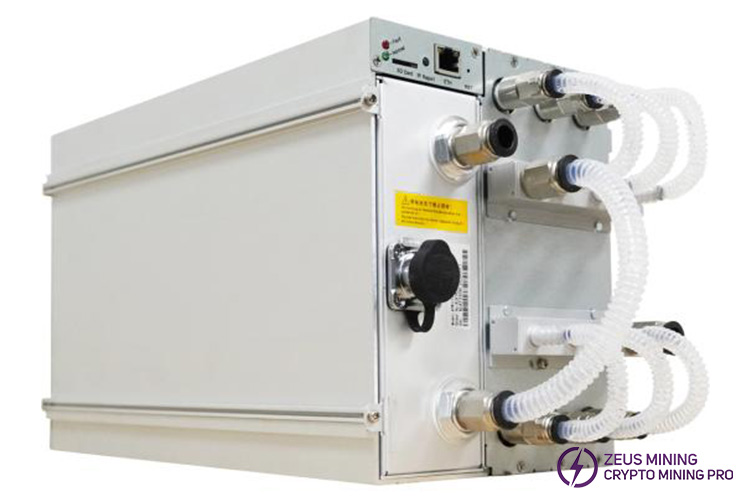
Water-cooled miners can also effectively reduce miner temperatures. For example, Antminer S23 Hydro Bitcoin miner uses a closed-loop liquid cooling system where the water-cooled plate directly contacts the ASIC chip, significantly improving heat dissipation efficiency compared to air cooling. Operating noise is below 65 decibels, equivalent to normal indoor conversation, effectively solving the problem of noise pollution in miner farms.
V. Recommended practical products to aid cooling
l Ducted exhaust kit: Includes a high-powered exhaust fan and retractable duct, effectively drawing hot air outdoors, a powerful tool for improving the thermal environment of the miner room.
l Miner rack/bracket: Choose a metal rack with sufficient ventilation gaps at the bottom to allow air to flow smoothly under the equipment, preventing heat buildup on the ground.
l Ambient temperature and humidity monitor: monitors temperature changes in the miner room in real time, controlling fan speed or air conditioning temperature.
l Noise reduction and sound absorption cover/cabinet: In scenarios where fan noise affects living spaces, these covers with sound insulation and ventilation designs can isolate noise to a certain extent.
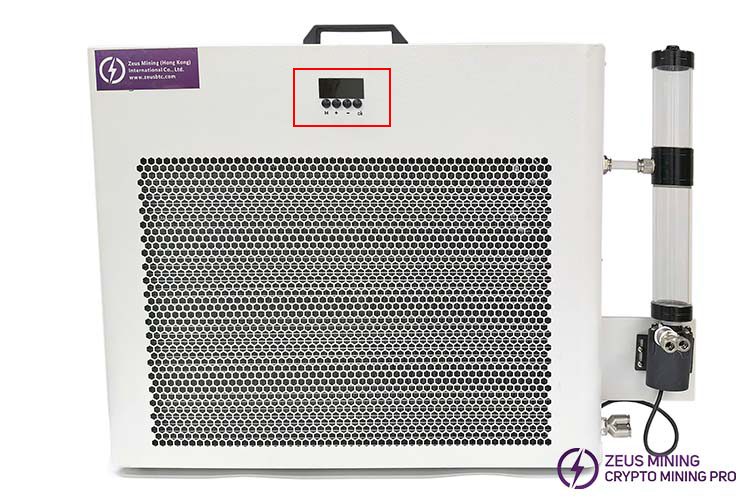
l Water cooling kit/immersion cooling tank: designed for high-powered miners or multi-device clusters with higher requirements, providing extremely stable cooling performance. For example, 12.8KW intelligent temperature-controlled water-cooled radiator can support the cooling of two miners simultaneously. It is suitable for all water-cooled miners and most air-cooled miners. Equipped with 12 powerful intelligent fans that automatically adjust their speed based on temperature, this ensures efficient heat dissipation and stable operation of the miner.
VI. Summary: cooling is the cornerstone of stable mining in home and small-scale mining farms
If you expect stable equipment performance, longer hardware lifespan, and want to keep noise levels within acceptable limits, especially in a home or apartment environment, then cooling is absolutely crucial.
Air cooling solutions are perfectly adequate as long as airflow is properly organized and cooling is smooth. However, as the number of devices increases or the power of individual units rises, the efficiency advantages of water cooling, immersion cooling, or hybrid cooling solutions become apparent. It is recommended that you start with simple air cooling optimizations (such as improving exhaust and proper layout), while closely monitoring temperature changes, and then gradually upgrade the solution based on actual results. With proper methods that balance cooling, ventilation, and environmental control, home mining can remain a stable and sustainable option.
Disclaimer:
For cryptocurrency tutorial purposes only, not investment advice. This website is not responsible for the actions taken by readers based on the information in this article.
For more products and information, please click to join our official Telegram channel.
 China Mainland Hong Kong
  Business Hours: (GMT+8) 08:30-20:00 Mon to Sat
  Company Phone: +86-023-72227777