

If you have ever actually operated a cryptocurrency miner, you likely share a common sentiment:
☞ The noise is far louder than you imagined.
Initially, many people assume, "It's probably just the sound of the fans." However, once the miner is actually up and running, they discover that this incessant noise is actually quite difficult to endure over the long term within an indoor environment.
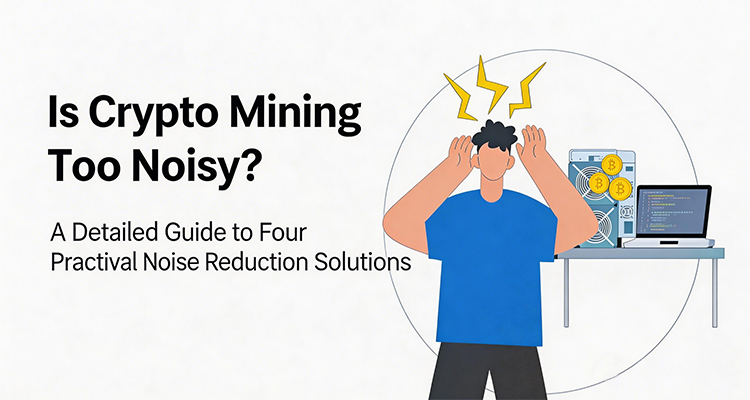
This is especially true when the equipment enters full-load operation; the noise level rises significantly—it isn't merely "loud," but creates a persistent, oppressive sensation.
This article avoids complex theoretical jargon; instead, it approaches the subject from a practical user's perspective to help you clarify three key points:
l Where exactly does the noise come from?
l Why does it seem to become more pronounced over time?
l What are the feasible methods for noise reduction?
I. The Primary Sources of Mining Noise
The noise generated by a miner does not stem from a single source but rather results from the superposition of multiple factors.
1. Cooling Fans (The Primary Source)
Currently, the vast majority of miners utilize air-cooling systems.
During high-load operation, the fans must spin at high speeds to dissipate heat. Their rotational speeds can typically reach several thousand revolutions per minute (RPM), resulting in corresponding noise levels generally ranging between 75 and 100 decibels. In an everyday context, this sound is roughly equivalent to a vacuum cleaner operating at close range or the noise level found on a busy street.
2. Noise Generated by Airflow
Aside from the fans themselves, the noise produced by airflow is easily overlooked. As hot air rushes rapidly through the chassis and ventilation ducts, it creates a persistent "whistling" sound. If a large number of devices are in use, or if the ventilation system is inefficient, these airflow noises can compound, potentially even coalescing into a distinct, low-frequency rumble.
3. Changes in Equipment Condition (Dust Accumulation and Aging)
After a period of use, many people notice that the very same equipment seems to have become significantly noisier.
Accumulated dust on the fans, worn-out bearings, and diminished cooling efficiency—all of these factors force the fans to operate at even higher rotational speeds, thereby further amplifying the noise.
II. The Impact of Noise-Related Issues
1. Impact on Personal Health
From a human health perspective, prolonged exposure to environments exceeding 70 decibels can trigger physical discomfort. Furthermore, continuous noise levels above 80 decibels may lead to hearing damage, headaches, reduced concentration, and sleep disturbances. For individual users conducting mining operations at home, the ceaseless hum of miners—running day and night—can easily disrupt daily life and even strain relationships with neighbors.
2. Impact on the Surrounding Environment
In certain countries and regions, industrial noise has been brought under the scope of environmental regulation; non-compliant operations may result in fines or even mandatory shutdowns.
In early 2025, a gold mine in the Australian state of Victoria was sued by nearby residents for causing noise disturbances; the plaintiffs alleged that the roaring of machinery late at night led to health issues such as insomnia and heart palpitations. That same year, a Bitcoin mining facility in Texas, USA, faced a similar lawsuit, with local residents claiming that the persistent noise caused health impairments, including hearing loss. Once such disputes enter the judicial process, they may not only result in financial compensation but, in severe cases, could even force the mining facility to shut down. Therefore, noise control measures should be taken into consideration from the very initial planning stages of any mining facility.
III. Four Practical Noise Reduction Strategies
The methods outlined below represent some of the most common, practical, and effective solutions currently available.
1. Optimize Cooling Methods
The cooling system is the primary source of noise in mining operations; consequently, improving the cooling design often yields immediate and significant noise reduction results. Liquid cooling systems can reduce miner noise levels from approximately 90 decibels to below 50 decibels; however, the retrofit costs are relatively high (starting at several hundred dollars per unit), making this solution better suited for medium-to-large-scale mining farms or long-term operators.
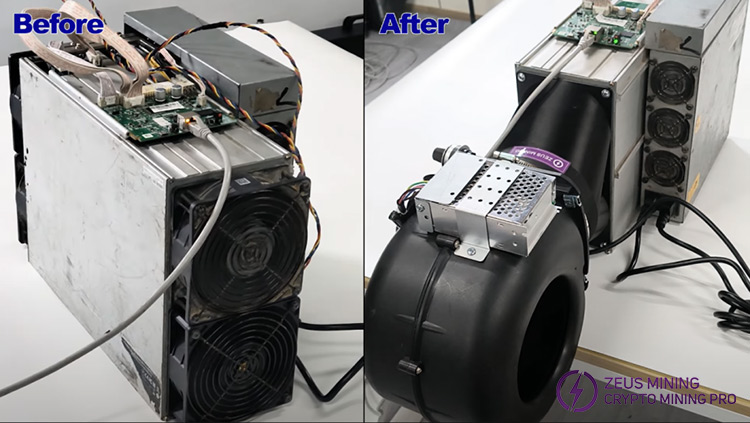
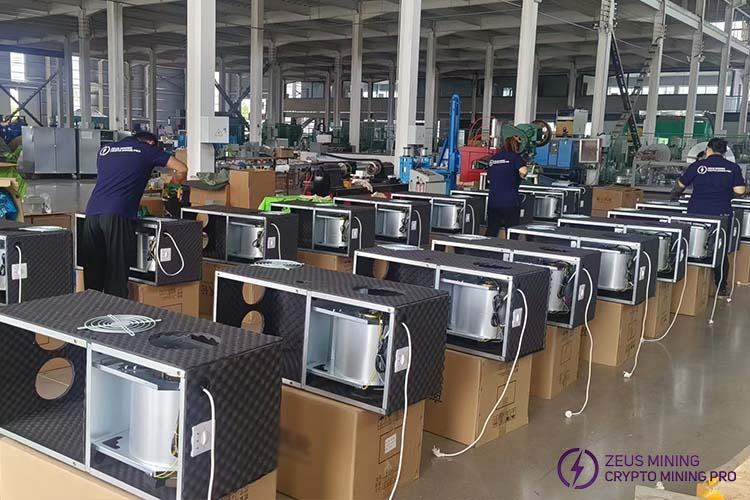
For home miners, a more cost-effective approach typically involves utilizing air-cooled setups. If you wish to quickly reduce noise levels without replacing your existing hardware, consider installing specialized silent fans designed for miners or enclosing the equipment in a soundproof box.
Click here to view recommended models: Blower Silencer 2nd Gen for ASIC Miner, Crypto miner silencer box with LCD version
2. Implement Physical Soundproofing
Installing barriers along the noise propagation path is an effective method for mitigating environmental impact. During the construction of a mining facility, materials such as sound-absorbing foam and soundproofing panels can be applied to walls and ceilings. Individual mining rigs can also be enclosed in specialized soundproof hoods; these products effectively contain noise within a confined space while maintaining necessary ventilation channels. Furthermore, selecting a site located as far as possible from sensitive areas—such as residential zones and schools—constitutes a fundamental measure for minimizing noise-related complaints at the source.
3. Refined Equipment Management
Selecting mining rigs that inherently possess low-noise characteristics—such as the "silent" ASIC miners offered by certain manufacturers—lays a solid foundation for noise reduction efforts. During operation, adjusting fan speed curves to avoid unnecessary full-speed running helps strike a balance between heat dissipation and noise reduction. Additionally, regularly cleaning dust accumulation from fans and replacing aging components can prevent the generation of additional noise caused by equipment operating in poor condition.
4. Shift Business Models
For industry participants seeking to completely eliminate noise-related issues, cloud mining and cloud hosting offer viable alternatives. Under the cloud mining model, users participate in mining by leasing hash rate from the cloud; since they do not need to purchase their own hardware, noise issues are naturally non-existent. For those who already own equipment, hosting services provide another option: entrusting miners to professional data centers for centralized operation and maintenance, where the provider assumes responsibility for cooling, soundproofing, and daily management. This approach not only eliminates noise-related headaches but also provides access to a more stable operating environment and professional technical support.
How to Choose a Cloud Mining Platform
Comparison of different noise reduction methods:
Scenario | Noise reduction effect | cost | Suitable For |
Liquid Cooling | ⭐⭐⭐⭐⭐ | High | Mining Site |
Soundproof box | ⭐⭐⭐⭐ | Middle | Family miners |
Silent fan | ⭐⭐⭐ | Low | Beginner Users |
Cloud Hosting | ⭐⭐⭐⭐ | Pay Monthly | No-hassle users |
Overall, mining noise is not an uncontrollable issue. By optimizing cooling systems, implementing soundproofing measures, and judiciously selecting operating modes, noise levels can be kept within an acceptable range in most scenarios. For long-term operators, planning noise reduction strategies in advance is often more cost-effective than attempting remedial fixes after the fact.
Disclaimer:
For cryptocurrency tutorial purposes only, not investment advice. This website is not responsible for the actions taken by readers based on the information in this article.
For more products and information, please click to join our official Telegram channel.
Dear Customers,
Due to the upcoming National Day holiday in China, our international logistics services will be suspended. Our company will suspend shipments on October 1, 2026, and resume shipments on October 6, 2026. There will be some delays in shipping before and after the holiday. Please be patient and wait for updates. Thank you for your understanding and support.
Best wishes,
ZEUS MINING CO., LTD.
 China Mainland Hong Kong
  Business Hours: (GMT+8) 08:30-20:00 Mon to Sat
  Company Phone: +86-023-72227777